As temperatures rise, fresh and light dishes become incredibly appealing – and salads emerge as the undisputed queens of Italian dining tables. But that doesn’t mean you can’t satisfy your palate!
With well-balanced, high-quality ingredients, even a basic recipe can turn into a gourmet experience: Parmigiano salads, for instance, represent the perfect balance between delicacy and substance. Parmigiano Reggiano is, in fact, a functional food rich in high biological value proteins and calcium, making it ideal for completing the nutritional profile of vegetables and grains.
So, let’s get straight to the point: let’s discover how to prepare nutritious salads with the king of cheeses.
Not just lettuce: different bases for your Parmigiano salad
Let’s abandon the preconception of salads made solely with iceberg or butterhead lettuce: modern cuisine offers countless alternatives. To create an excellent Parmigiano salad, the first rule is to vary the texture and density of the base ingredients. The base determines the way the cheese interacts with the other elements: a tender leaf embraces thin shavings, while a robust grain pairs beautifully with cubes.
Let’s look at a few options.
Crisp green salads with Parmigiano
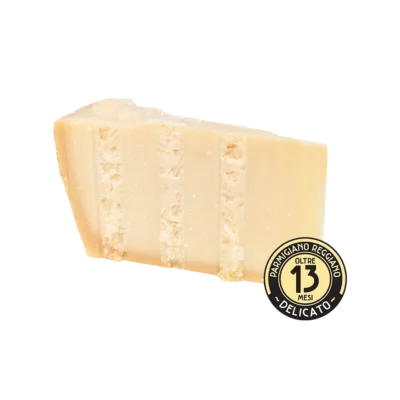
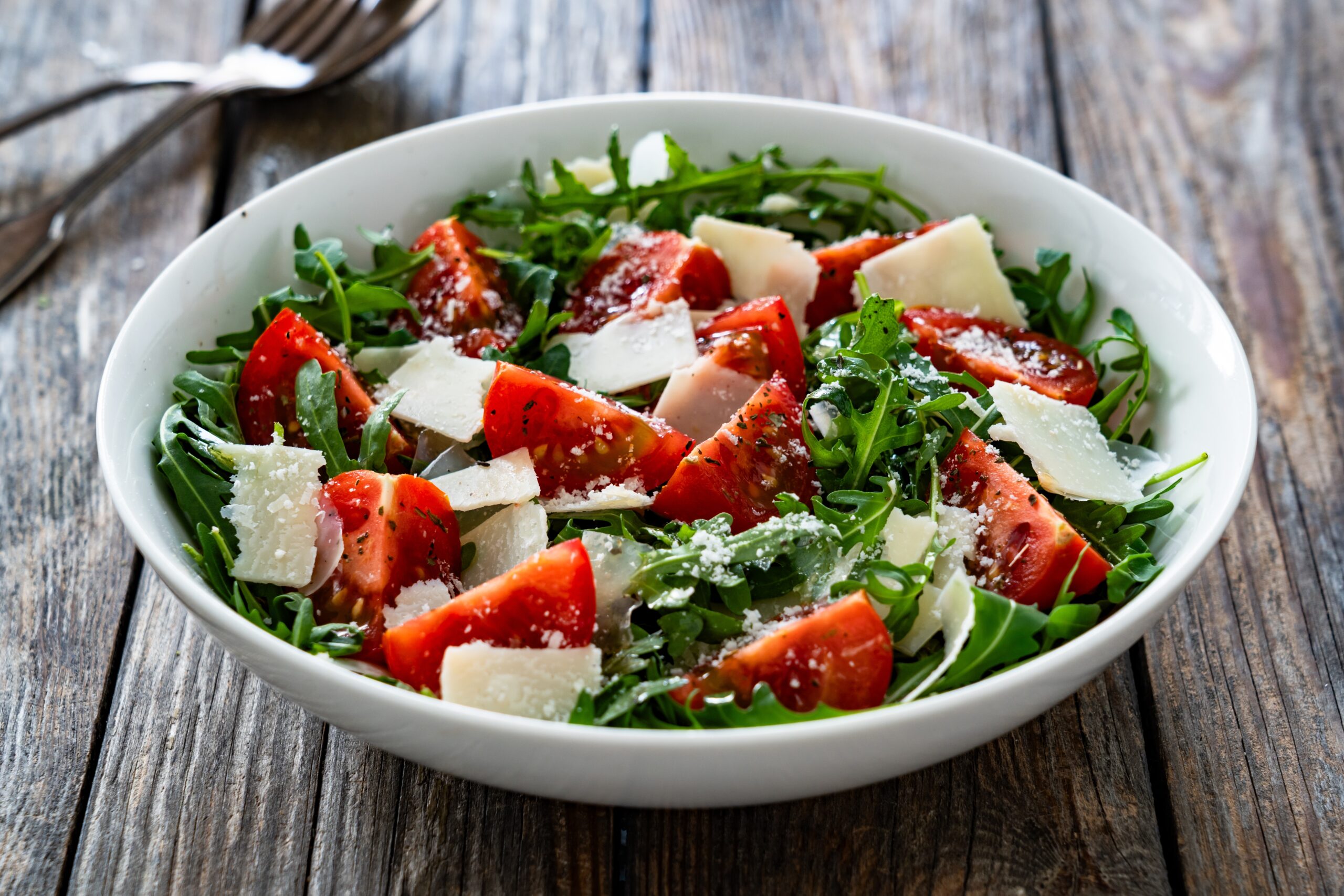
Green leaf salads are a timeless classic, but for a perfect pairing with Parmigiano, we need to aim for varieties with a bold character. Rocket is the companion of choice: its peppery and slightly bitter notes create a sublime contrast with the milky sweetness of a 13-month Parmigiano or the complexity of a 27-28 month matured cheese.
Lamb’s lettuce is also an excellent ally for Parmigiano salads: with its velvety and delicate texture, it tenderly wraps around the cheese shavings and enhances their savouriness. If you then add some late-harvest radicchio or Belgian endive, the result will be phenomenal: crisp, well-rounded, and 100% balanced!
Grain salads with Parmigiano
If you are looking for a meal to keep you going until the evening, grains are the solution for you. Spelt, quinoa, and pearl barley offer a chewy texture that marries perfectly with the granularity of Parmigiano Reggiano. These bases are also perfect for meal prep: you can cook them in advance and store them in the fridge, ready to use as needed throughout the week.
Quinoa in particular, being gluten-free and rich in protein, creates a formidable and nutritious mix for athletes when paired with the cheese. Enriched with grilled vegetables and/or pulses, salads with Parmigiano and grains can serve as true pillars of your diet.
Fruit salads with Parmigiano
The pairing of fruit and cheese is a cornerstone of Italian gastronomy (we’ve also discussed this in a dedicated article): as the old saying goes, “don’t let the farmer know…” In salads, this combination finds its ultimate expression of freshness. Salads with Parmigiano and fresh fruit play on the contrasts of tartness, sweetness, and savouriness:
- green apple provides acidity and crispness;
- pear offers a grainy sweetness that echoes the texture of the cheese;
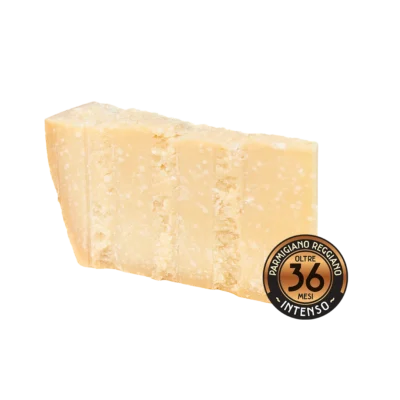
- figs, with their sugary flesh, are excellent for balancing the shavings of a 36-38 month Parmigiano;
- berries offer tart notes and antioxidants;
- citrus fruits, such as orange or pink grapefruit, are highly viable winter alternatives.
In such preparations, Parmigiano is more than just an ingredient: it is the decisive element that transforms a savoury fruit salad into a refined dish to be enjoyed as a starter or an aperitif!
The right balance: Parmigiano salads, without overpowering flavours
Creating Parmigiano salads that truly work requires a particular sensitivity towards proportions. This cheese has a strong personality and if used in excessive doses or in the wrong format, it risks dominating and masking all the other ingredients, making the result too salty and heavy. Therefore, pay attention to its cut and maturation.
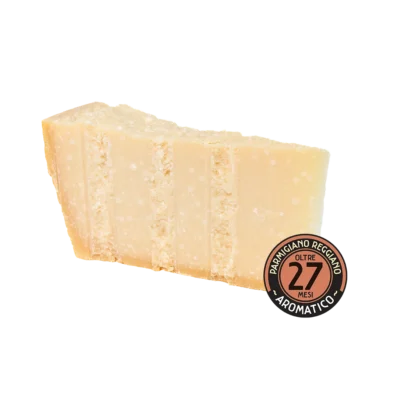
For leafy green dishes, it is preferable to use a 13-month matured cheese, which is sweeter and softer. If, on the other hand, the base consists of grains or strongly flavoured elements, such as walnuts or balsamic vinegar, a 27-28 month maturation will be able to add the necessary complexity.
Thin shavings allow for an even distribution among the vegetables, while cubes are perfect alongside quinoa, spelt, barley, or potatoes – the sharp contrast in texture is very pleasing to the palate.
Bear in mind: the role of Parmigiano must be to accompany and enhance, and never to overpower. The harmony between freshness and depth is essential for a successful recipe.
Parmigiano salad recipes: 3 original and nutritious ideas
Having studied the theory… let’s move on to the practice! Here are three Parmigiano salad recipes for you, designed to satisfy different needs: from an energetic lunch to a light dinner, right through to brunch or an original aperitif.
Spelt, cherry tomato, and Parmigiano salad
The queen of nutritious Parmigiano salads is perfect for a packed lunch for the office or an outdoor picnic.
First, boil the spelt in salted water, drain it al dente, and leave it to cool. Then, add quartered cherry tomatoes, pitted Taggiasca olives, and a handful of fresh rocket. The touch of class? Generous shavings of 27-28 month Parmigiano Reggiano, which balance tomatoes’ sweetness and olives’ acidity. You’ll get a balanced dish, rich in fibre and slow-release carbohydrates – as well as being flavourful!
Mixed leaf, pear, and Parmigiano salad
For a light yet sophisticated dinner, try a base of mixed leaves (a blend of tender leaves such as baby chard, rocket, and baby lettuce). Add a pear cut into wafer-thin slices to arrange over the bed of leaves. Finally, finish it all off with a few toasted walnut halves and petals of 36-38 month Parmigiano. The tyrosine crystals, typical of highly matured varieties, crunch under the teeth, generating a highly pleasant textural contrast with the pear softness. If you want to be daring, a drizzle of acacia honey can masterfully seal this meeting of flavours.
Baby spinach, strawberry, and Parmigiano salad
Are you a lover of absolute freshness? Then you will adore this next Parmigiano salad. Use baby spinach as a base: its tender and delicate flavour enhances the dish excellently. Add some halved strawberries. Then add some Parmigiano cut into irregular cubes: the marriage between the sugary acidity of the strawberries and the savouriness of the cheese will be highly appreciated by your palate. If you wish, you can increase the mineral intake with sunflower or poppy seeds.
Parmigiano salad: dressings and seasonal pairings
Dressings play a fundamental role in Parmigiano salads – just as they do in any other dish. Choosing them based on seasonal availability will improve the overall flavour, and it will prove to be a boon for the environment!
In spring and summer, opt for light citronettes: lemon or lime juice, high-quality extra virgin olive oil, and a pinch of white pepper. The tartness of the citrus cleanses the palate and highlights the herbaceous notes of the younger Parmigiano, which you can pair with cucumber, peaches, apricots, and other fruit and vegetables of the season.
In autumn and winter, however, the must-have pairings are roasted butternut squash, pomegranate seeds, and nuts. Dressings based on Modena balsamic vinegar or mustard creams, which marry perfectly with longer maturations, are ideal. And don’t forget: cooked vegetables, if left to cool slightly, can be used for super appetising Parmigiano salads. Try it with steamed broccoli or artichokes!
Choose Milanello’s Parmigiano for your salad!
All great recipes need quality raw ingredients, and Parmigiano salads are no exception: the result will only be truly special if the cheese used comes from a controlled supply chain, where animal welfare and the master cheesemaker’s skill make the difference. Enjoy the best of the Emilian tradition, choose Caseificio Agricolo del Milanello. Visit our online shop or contact us for more information about our pastures and our products!
Parmigiano salads FAQs
Which maturation of Parmigiano Reggiano is best suited for salads?
For Parmigiano salads based on leafy vegetables or fruit, we suggest a 13-month maturation, with a sweet and milky flavour. Instead, if you want to prepare grain salads or ones with strongly flavoured ingredients, such as walnuts and balsamic vinegar, a 27-28 month cheese offers the perfect balance between savouriness and fragrance without overpowering the other flavours.
Can Parmigiano salads be considered a complete meal?
Yes, absolutely. When paired with a source of complex carbohydrates like spelt or quinoa, but also bread, and a good portion of vegetables, Parmigiano is a highly functional food, as it is rich in proteins and mineral salts. This makes Parmigiano salads absolutely complete, nutritious, and healthy preparations.
How to use Parmigiano without overpowering the other ingredients?
Texture is key: in leaf salads, choose wafer-thin shavings capable of distributing evenly. In more structured recipes based on pasta or grains, however, prefer irregular cubes to provide a note of crisp savouriness in every bite.
How to prevent Parmigiano from softening too much in the salad?
Parmigiano maintains its typical texture if added correctly. Our advice is to dress the base (vegetables or grains) with oil and lemon or vinegar and mix well. Only add Parmigiano just moments before serving. This way, the cheese will remain fragrant and keep its aromatic profile intact.
What are the best fruit pairings for a gourmet Parmigiano salad?
Pears and green apples are great classics. For an original touch, you can also try strawberries in spring and figs in summer. In winter, however, oranges and pomegranate seeds create an irresistible chromatic and flavour contrast with the cheese.